Decarbonising clinical pathways with Dora

 Claude Opus 4.5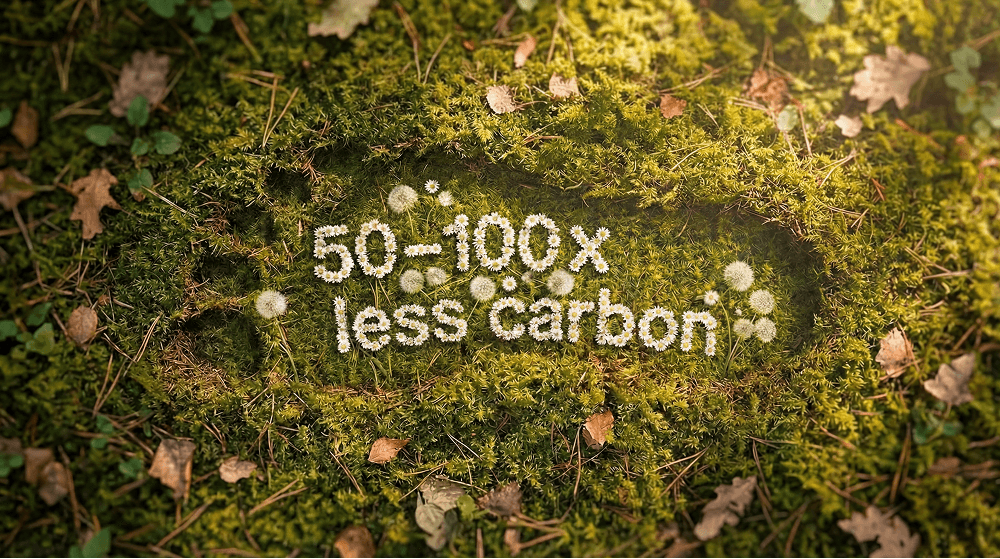
Executive Summary
Dora produces 50 to 100x less carbon than an equivalent face-to-face consultation, NHS adoption of this technology provides a radical way to decarbonise clinical pathways and support the commitment to 'Net Zero'.
The Challenge: Healthcare's Carbon Burden
In 2020, the carbon footprint of the NHS was estimated to be 24.9 million tonnes of carbon dioxide equivalents (CO2e). Achieving 'net zero' by 2045 will require the NHS to radically transform the way health services are provided. Ufonia provides a digital healthcare solution which can drastically decarbonise clinical pathways through reduced travel related emissions, reduced consumables and reduced infrastructure and energy requirements.
Commitment to 'Net Zero'
Ufonia is not just a technology provider; we are a sustainability partner. Our work has been supported by SBRI Healthcare's Net Zero grant funding, specifically aimed at scaling innovations that reduce the environmental impact of the health service. Ufonia won the "Best Poster Prize" at Eco Medics 2022: A Prescription for Climate Action', for our work 'Carbon-footprint modelling an Ear Nose and Throat out-patient clinical consultation'
Key take home message
An analysis from the centre of sustainable healthcare found that Dora produces 50 to 100x less carbon than a traditional face to face consultation for patients on a cataract pathway

Our environmental impact
The Centre for Sustainable Healthcare evaluated the environmental impact of introducing Dora into the cataract surgery pathway at four hospitals: Oxford University Hospital's NHS Foundation Trust (OUH), Buckinghamshire Healthcare NHS Trust (BHT), Royal Berkshire NHS Foundation Trust (RBH), and Frimley Health NHS Trust (FHT).
Decarbonising clinical pathways
Dora removes the need for:
- Patient & staff travel: Eliminates thousands of car journeys.
- Hospital Infrastructure: Reduces the energy required to light, heat, and power clinical spaces.
- Consumables: Minimizes the waste associated with in-person reviews
100x less Carbon
A traditional face-to-face pre-assessment produces an average of 12.78 kgCO2e.
A Dora call produces just 0.13 kgCO2e—effectively reducing the carbon footprint by 97%.
Environmental savings at scale
Introducing Dora into the cataract surgery pathway creates environmental savings of on average 129.31 kgCO2e per 100 surgeries (range 68.04 to 246.2 kgCO2e across the four pilot NHS sites). This translates to a total potential saving of over 16,000 kgCO2e every year
Higher patient volumes lower carbon impact
The environmental "cost" per Dora call actually decreases as more patients are onboarded to the server. Increasing server capacity could further reduce the carbon footprint of each Dora call to only 0.0619 kgCO2e per call.
"It has been really exciting to work alongside Ufonia to undertake a sustainability analysis on the introduction of their technology into clinical pathways. Our report shows substantial carbon savings through Dora's deployment, it is fantastic to see the real-world sustainability impact of this new technology."


"It has been really exciting to work alongside Ufonia to undertake a sustainability analysis on the introduction of their technology into clinical pathways. Our report shows substantial carbon savings through Dora's deployment, it is fantastic to see the real-world sustainability impact of this new technology."
Conclusion
Implementing Dora actively decarbonises clinical pathways. By replacing face to face assessments to autonomous digital telephone consultations, healthcare providers can decouple clinical activity from its traditional carbon cost—eliminating the emissions associated with patient travel, clinical consumables, and hospital utilities. This transformation provides a scalable framework for the NHS to meet its 'Net Zero' obligations without compromising on clinical safety or patient experience. Ultimately, the transition to AI-led pathways like Dora proves that environmental sustainability and operational excellence are not mutually exclusive, but are rather the two essential pillars of a resilient, future-proof health service.
How much can we save you every year?*

*Carbon savings are calculated using 129.31 kg CO₂e saved per 100 surgeries. Tree equivalence assumes one mature tree absorbs around 21 kg CO₂e per year.